The philosophers
The thinkers behind the stories.
Every Stoic Sprout story grows from a real idea, thought long ago by a real person. Some were strict Stoics. Others were kindred minds who reached the same steadiness by their own road. And the tradition never really stopped. It lives on today in how we think about resilience and a calmer mind. We follow the teaching, not the label, and we say plainly where each one stood.
In short: Every story here grows from something a real person thought. Some were Stoics; others reached the same steadiness by their own road. Each page says plainly which is which.

Roman Stoic · 121–180 AD
Marcus Aurelius
A Roman emperor who wrote a private journal to keep himself steady. His Meditations is Stoicism lived, not just taught.
Roman-era Greek Stoic · c. 55–135 AD
Epictetus
Born a slave, he taught that real freedom is inside, knowing what is yours to control and what is not.
Roman Stoic · c. 4 BC – 65 AD
Seneca
A Roman writer whose letters read like advice from a wise friend, on worry, anger, and knowing when you have enough.
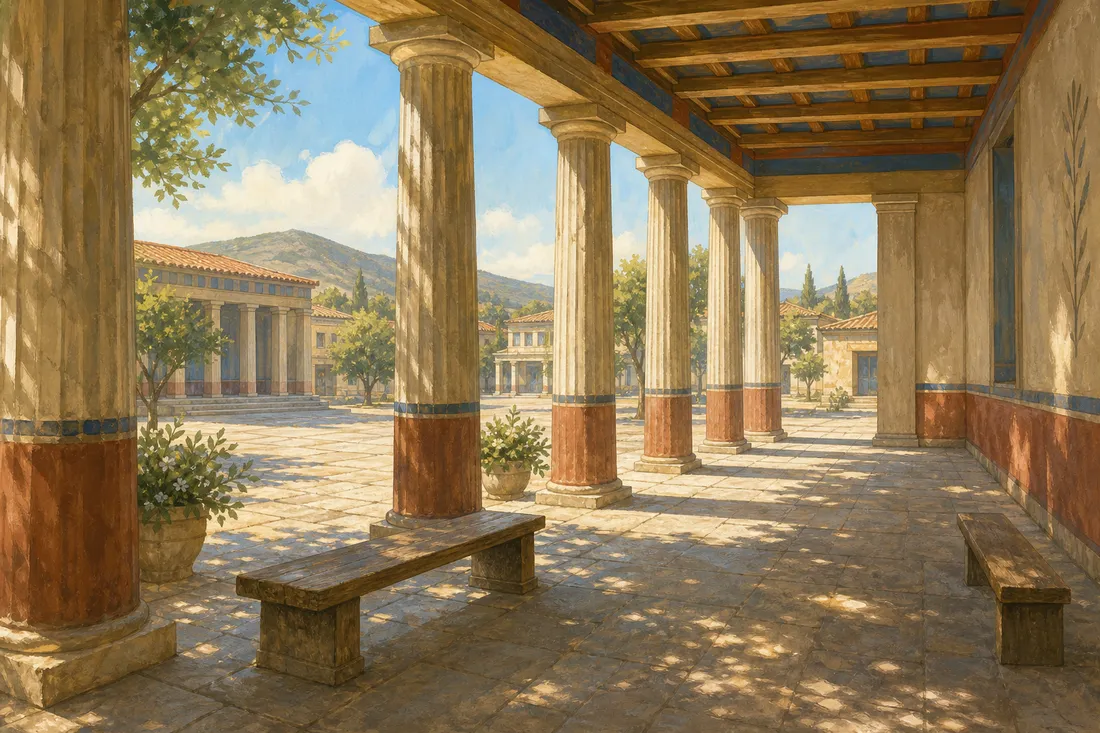
Founder of Stoicism · c. 334–262 BC
Zeno of Citium
A merchant shipwrecked into philosophy. He founded Stoicism and taught from a painted porch that gave the school its name.
Forerunner of the Stoics · c. 470–399 BC
Socrates
Not a Stoic himself, but the thinker the Stoics traced their teaching back to. He taught by asking questions.
A carrier of Stoic ideas · 106–43 BC
Cicero
A Roman lawyer and writer who wasn't quite a Stoic, but preserved their ideas so well that we still have them because of him.

A parallel tradition · c. 5th–4th century BC
The Buddha
A teacher from ancient India who, with no link to the Stoics, arrived at strikingly similar ideas about the mind and letting go.

A modern challenger · 1844–1900
Friedrich Nietzsche
A modern philosopher who argued against the Stoics, yet whose "love of fate" lands close to their idea of accepting what you can't change.

20th-century psychiatrist · 1905–1997
Viktor Frankl
A psychiatrist who survived the Nazi camps and found that the last freedom, choosing how you respond, can never be taken away.
The tradition, still living

Founder of cognitive therapy · 1913–2007
Albert Ellis
The psychologist who founded a pillar of modern therapy by taking one idea straight from Epictetus, and crediting him for it.
The tradition, still living

Naval officer and prisoner of war · 1923–2005
James Stockdale
A naval pilot held prisoner for over seven years who said the philosophy of Epictetus was what kept him whole.
The tradition, still living

Contemporary teacher · born 1948
Eckhart Tolle
A modern teacher of presence whose focus on the here-and-now overlaps with Stoic practice, and marks where mindfulness and Stoicism differ.
The tradition, still living
More thinkers join this shelf over time, from the ancient Stoics to teachers much closer to our own day.
From idea to bedtime.
These ideas become calm stories your child can hear tonight. A few are free to try, no card needed.