Socrates
Not a Stoic. He lived about a century before Stoicism began, and he never used the word. But the Stoics looked back to him as their model and traced their teaching to his, through his followers. He is the ancestor of the whole idea.
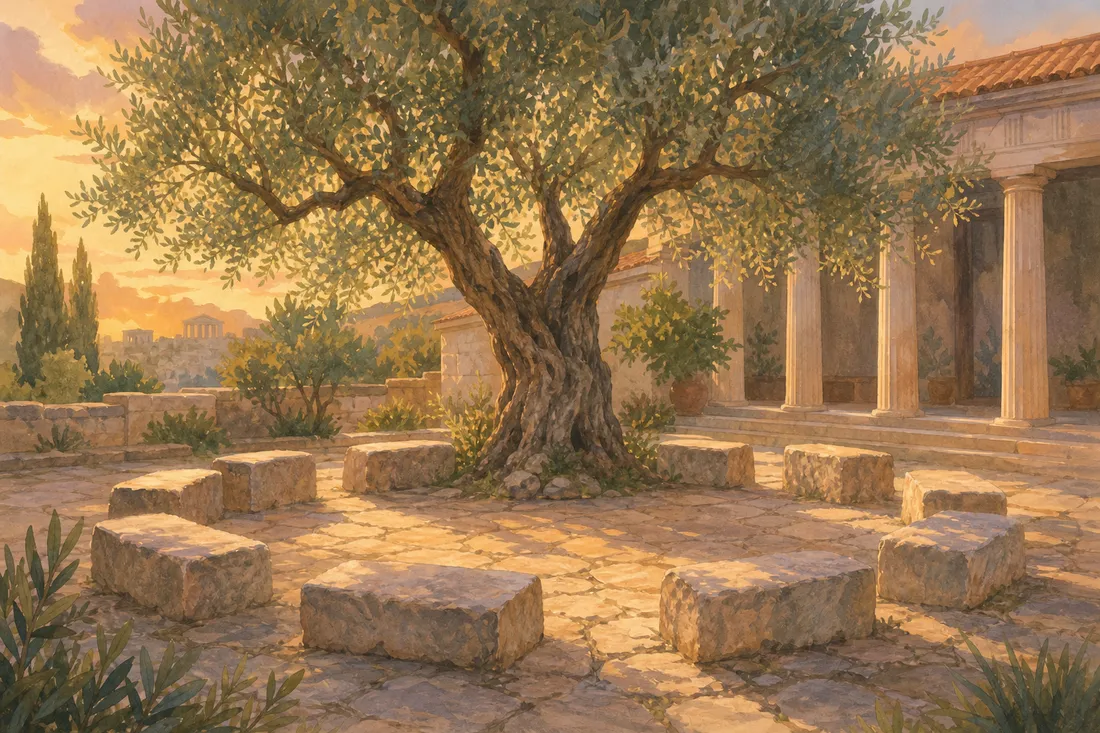
Here’s an honest place to start: Socrates was not a Stoic. He lived in Athens about a hundred years before Stoicism existed, and he never heard the word. So why is he on this shelf?
Because the Stoics themselves looked back to him as their model. Stoicism was founded later, by a man named Zeno, and its line runs back, teacher to teacher, to Socrates. The Stoics took their most important habits from him: asking hard questions instead of accepting the first answer, and caring more about being a good person than about being rich or famous. When we follow the teaching rather than the label, Socrates is where a lot of it begins.
He never wrote anything down himself. Everything we know comes from his students, especially Plato, who wrote out his conversations. And they were conversations: Socrates taught by asking questions rather than giving speeches.
Stop and look at your own life
In his own words (through Plato)
The life which is unexamined is not worth living.
That’s a big line for a small person, so here’s the gentle version: it’s worth stopping now and then to look at what you’re doing and why. Was that fair? Did I want that, or did I just want to win? Children are wonderful at this kind of wondering when we invite it, and it’s the root of every Stoic idea that came after.
It’s alright not to know
Socrates was called the wisest man in Athens, which puzzled him, because he felt he knew so little. He decided the difference was that he didn’t pretend. He didn’t think he knew things he didn’t.
For a child, that’s a quiet kind of courage: being able to say “I don’t know” without feeling small about it. There’s no failure in not knowing. It’s where finding things out begins, and it’s a far calmer place to stand than pretending.
Who you are matters more than what you have
Socrates cared little for money or status. What he thought worth tending was the kind of person you’re becoming: your honesty and your courage. The Stoics took this straight from him and built their whole way of life on it.
Said to a child, it’s this: the toys and the winning come and go, but the sort of person you are is yours to keep and to shape. That’s the part worth looking after.
For parents
Old ideas, gently told.
Stoic Sprout turns thinking like this into calm stories a child can actually hear. A few are free to try.