For parents · What to say when...
What to say when a pet dies
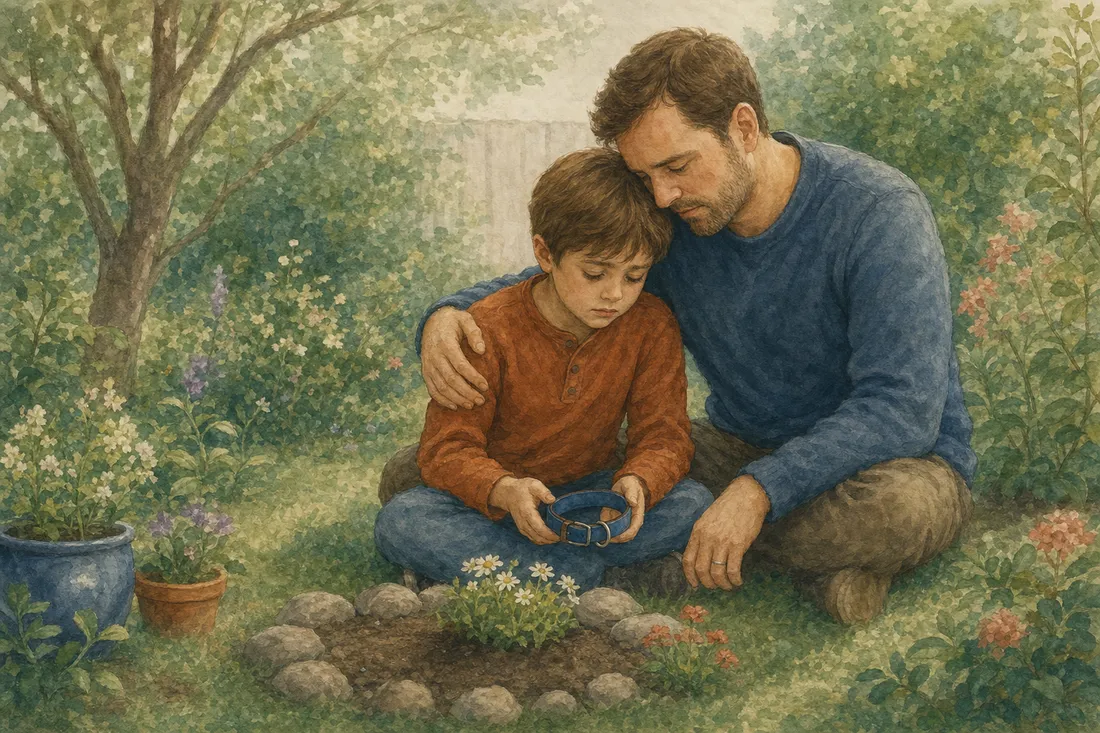
Short answer: Be honest and gentle. Use the real words ("died", not "went to sleep"), let the sadness be real, and grieve alongside them. Don't rush to replace the pet or tidy the feeling away. A child's first grief, met with honesty and warmth, teaches them that loss can be survived and that love was worth it.
For many children, a pet’s death is their first real loss, and it can be a big one. The instinct to soften it is loving, but the gentlest thing is usually the honest thing. How we walk a child through this first grief quietly teaches them how to meet the losses that come later.
What to say in the moment
- Use the real words: “Ginger died today.” Soft phrases like “went to sleep” or “went away” can frighten a child or leave them waiting for a return. Plain and kind is clearest.
- Let the sadness be real: “It’s so sad. I’m going to miss her too.” Grieving alongside your child tells them their feeling is right and they aren’t alone in it.
- Don’t rush the replacement: a new pet can come one day. Offered too fast, it can feel like the one they loved is being tidied away before they’ve finished missing it.
The idea underneath
Epictetus taught a tender way to hold the things we love, knowing we won’t keep them forever.
From the Stoics
Never say of anything, I have lost it; but, I have restored it.
That sounds hard until you sit with it. Epictetus isn’t saying love less. He’s saying the pet was always a gift for a while rather than a thing we owned forever, and now the borrowed time is over. For a child, we soften this all the way down: the hamster was ours to love for its little life, and loving it was worth every day, even this sad one. That’s the same tender idea as The Clay Cup, a Stoic Sprout story about loving something dearly while knowing it won’t last forever.
The story for this
The Clay Cup
“Some special things can break.”
A favourite cup, and the tender truth that special things can break. A quiet way to love what we have while knowing nothing lasts forever.
Hear the story → Mark made Stoic Sprout as a dad in Melbourne, for his own young children, with calm stories drawn from the real Stoic philosophers. More about Mark →
Small stories for big feelings.
Calm tales from the real Stoic philosophers, with a phrase your child can keep. A few are free to try.