For parents · Building steady kids
How to teach your child to say sorry
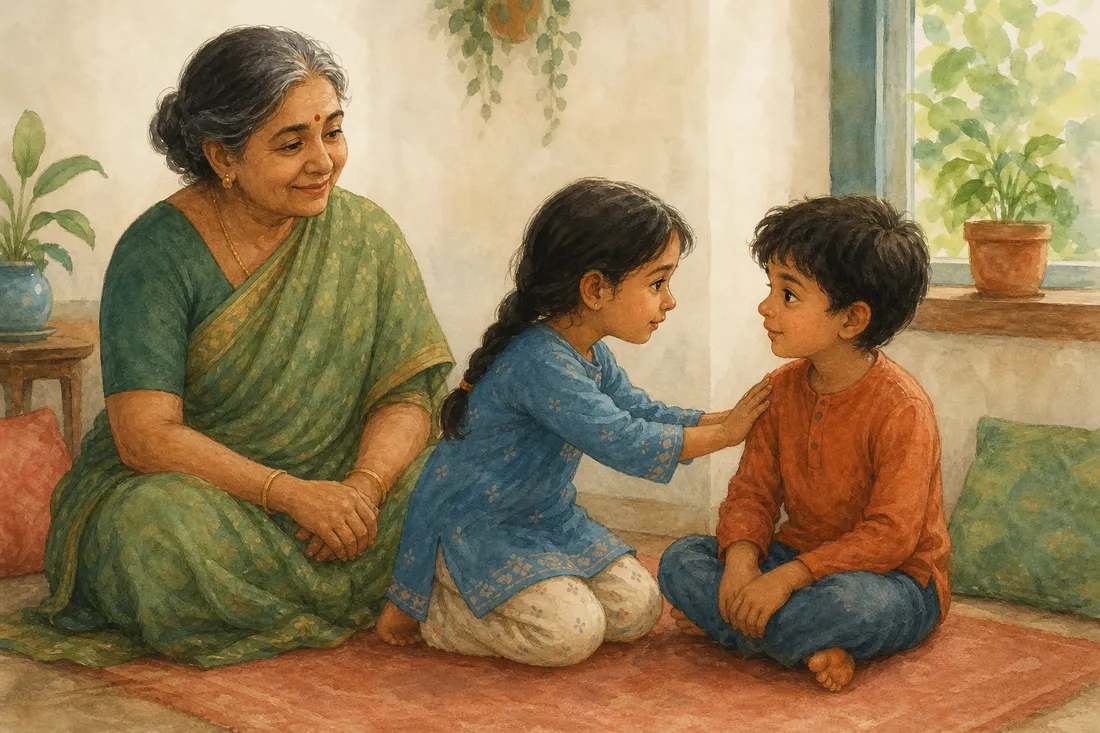
Short answer: A forced "say sorry" teaches a child to perform an apology, not to feel one. Help them see the other person's hurt, take their part honestly, and make it right in a way that means something. A child who learns that everyone gets it wrong sometimes, and that wrongs can be mended, grows up neither crushed by mistakes nor careless about them.
“Say sorry to your brother.” The words come out flat, the face says otherwise, and nobody believes it. A forced apology teaches a child to mumble a magic word so a grown-up will stop. It doesn’t teach them to mean it. A real sorry is a bigger, better thing, and it can be taught, gently, over time.
What to say in the moment
- Help them see the hurt: “Look at his face. He’s sad the tower got knocked down.” Understanding the other person is where a true sorry begins.
- Let them own their part: “You were cross, and you pushed. That happens. What could make it a bit better?” Owning the deed matters more than performing the word.
- Make the repair real: helping rebuild the tower, fetching an ice pack, a hug freely given. A mended wrong teaches far more than a mumbled word.
The idea underneath
Seneca, writing about anger, offered a piece of humility that makes apology possible: none of us gets it all right.
From the Stoics
We must first convince ourselves of this, that no one of us is faultless.
A child who believes they must be perfect finds sorry almost impossible, because saying it means admitting a crack. A child who knows that everyone gets it wrong sometimes can say sorry without their whole world caving in. A real apology doesn’t grow from shame. It grows from a plain, freeing truth: that we all slip up, and that most things can be mended. Teach that, and sorry stops being a punishment and becomes a kindness a child is glad to offer.
Mark made Stoic Sprout as a dad in Melbourne, for his own young children, with calm stories drawn from the real Stoic philosophers. More about Mark →
Small stories for big feelings.
Calm tales from the real Stoic philosophers, with a phrase your child can keep. A few are free to try.