For parents · What to say when...
What to say when your child feels left out
Short answer: Don't rush to fix it or to decide the other children are being unkind. Name the hurt first ("Being left out is one of the loneliest feelings"). Then gently separate what they can't control, whether others include them, from what they can change, which is how they treat people and what they do next. You can't hand a child friends, but you can help them stay warm and open, which is where friendship starts.
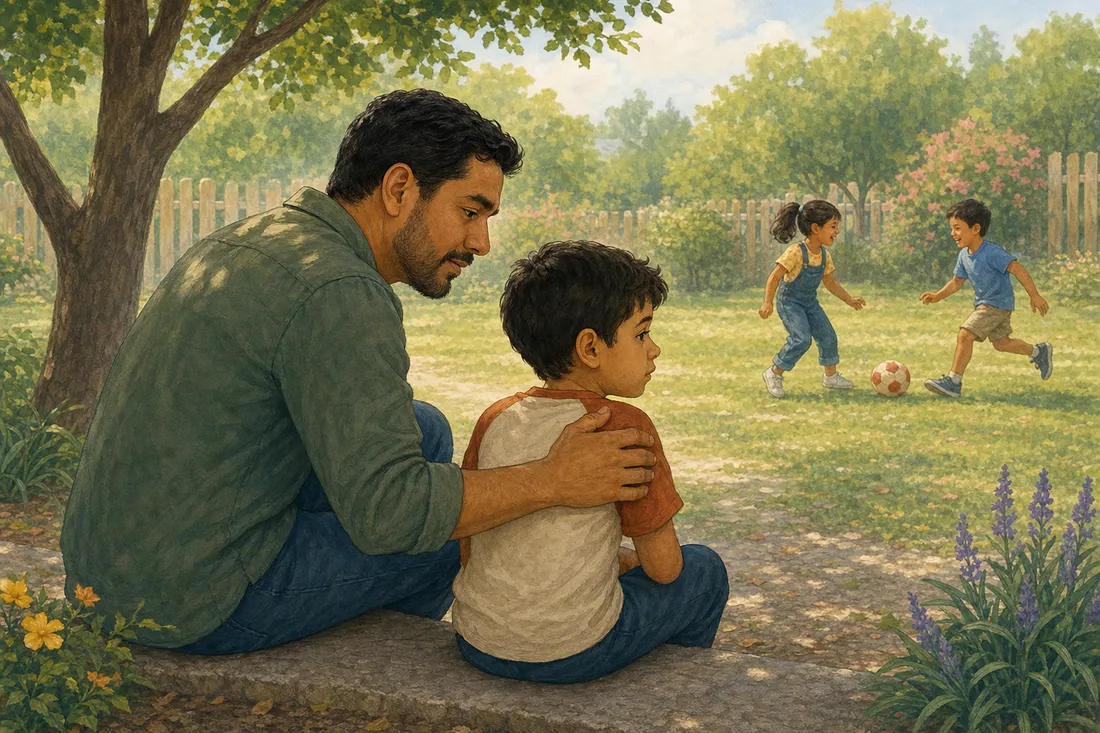
Few things ache like watching your child stand at the edge of a game they weren’t asked to join. It pulls at an old feeling in us too. The urge is to march over and fix it, or to decide the other children are being mean. Both can make it bigger. There’s a calmer way to help.
What to say in the moment
- Name the loneliness: “You wanted to play with them, and they didn’t ask you. That feels awful.” Being understood is the first comfort.
- Don’t rush to blame or to fix: other children aren’t always leaving someone out on purpose, and swooping in can embarrass a child further. Sit with the feeling before you solve anything.
- Turn toward what’s theirs: “We can’t make them ask you over. What could you do?” Maybe join a different game, ask one child to play, or find another friend. Their next move is always theirs.
The idea underneath
The Stoics kept coming back to a hard, freeing line between what’s ours and what isn’t. Whether another child includes you isn’t yours to command. But Marcus Aurelius, a Roman emperor, kept reminding himself that people are made for one another.
From the Stoics
Men exist for the sake of one another.
A child can’t force their way into being wanted, and it’s cruel to pretend they can. What they can do is keep being the kind of friend others are glad to find: warm, fair, easy to be near. That part is always in their hands, and it’s the part that, over time, brings the others closer.
What to avoid
- “Just ignore them.” It tells a child their hurt doesn’t count. The feeling is real. Meet it before you move on.
- Fighting their battles for them. Stepping in every time robs a child of the small, hard practice of finding their own way in. Stay close, and let them try.
Mark made Stoic Sprout as a dad in Melbourne, for his own young children, with calm stories drawn from the real Stoic philosophers. More about Mark →
Small stories for big feelings.
Calm tales from the real Stoic philosophers, with a phrase your child can keep. A few are free to try.